Chinese Heritage

Cheng Ho Cultural Museum
Occupying eight restored shophouses on Lorong Hang Jebat, this is Melaka's largest museum. It documents the seven voyages of Admiral Zheng He (1405-1433) with maps, ship replicas, and artifacts spanning Chinese-Malay maritime relations.

Sam Po Kong Temple
Founded in 1795 at the foot of Bukit Cina, this temple is dedicated to Tua Pek Kong. Adjacent to the 559-year-old Hang Li Poh's Well and the Malacca Warrior Monument. Features a heritage gallery documenting the Chinese community's history.

Bukit Cina
Covering 25 hectares, this is one of the largest Chinese cemeteries outside China, with over 12,000 graves dating back to the Ming Dynasty. Gifted by Sultan Mansur Shah to Princess Hang Li Poh in the 15th century. Part of the UNESCO buffer zone.

Xiang Lin Si Temple
A modern double-storey Mahayana Buddhist temple on Jalan Tokong (Harmony Street), situated opposite the Cheng Hoon Teng Temple. Originally a wooden house in 1958, rebuilt in brick in 1985 with ornate Chinese Buddhist architecture.

8 Heeren Street Heritage Centre
A meticulously restored mid-18th-century Dutch-period house by Badan Warisan Malaysia. Demonstrates traditional shophouse conservation techniques and offers insight into the architectural layers of Malacca's Peranakan townhouses.

Straits Chinese Jewellery Museum
Housed in a heritage building on Jalan Tun Tan Cheng Lock, this museum displays exquisite Peranakan jewellery, furniture, and decorative arts. Opened in 2012, it showcases the craftsmanship and wealth of the Straits Chinese community.
Indian Heritage

Sri Poyyatha Vinayagar Moorthi Temple
The oldest intact Hindu temple in Malaysia, built in 1781 on Harmony Street. Dedicated to Lord Ganesha, it was built by the Chitty (Indian Peranakan) community. Features Dutch-influenced architecture with three 200-year-old wooden religious chariots (Rathams).

Chitty Village & Museum
Home to the Malacca Chettis, a unique Hindu Peranakan community of approximately 500 people tracing ancestry to 15th-century Tamil traders. The Chitty Museum preserves six centuries of Indo-Malay cultural fusion. Surrounded by nine community temples.

Little India (Jalan Bendahara)
A vibrant stretch along Jalan Bendahara filled with Indian textile shops, spice merchants, flower garland sellers, and restaurants serving banana leaf rice. The colorful streetscape comes alive during Deepavali and Thaipusam festivals.
Malay Heritage

Melaka Sultanate Palace Museum
A wooden replica of Sultan Mansur Shah's 15th-century palace at the foot of St. Paul's Hill, built entirely without nails using traditional Malay construction. Houses over 1,350 artifacts across three floors, documenting the Malay Sultanate era.

Kampung Hulu Mosque
The oldest functioning mosque in Malaysia in its original location, built in 1728 during the Dutch colonial period. Features a pagoda-style minaret and Javanese-Malay-Chinese architectural fusion. Its walls were reportedly made with granite, sand, and egg whites.

Kampung Kling Mosque
Built by Indian Muslim traders in 1748 on Harmony Street, this mosque blends Sumatran, Chinese, Hindu, and Malay architectural styles. Its triple-tiered green pyramidal roof and pagoda-style minaret reflect Malacca's multicultural heritage.

Tranquerah Mosque
One of the oldest mosques in Malaysia, built in 1728, served as the State Mosque before Masjid Al-Azim. The grounds contain the tomb of Sultan Hussein Muhammad Shah of Johor, who ceded Singapore to Stamford Raffles in 1819.
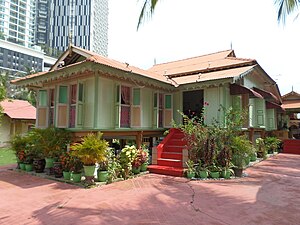
Villa Sentosa (Kampung Morten)
A beautifully preserved 1920s traditional Malay house in Kampung Morten village, functioning as a living museum. Showcases traditional Malaccan Malay lifestyle with artifacts including Ming Dynasty ceramics. Entry by donation.

Melaka Straits Mosque
A stunning modern mosque on artificial Pulau Melaka island, inaugurated in 2006. Appears to float on water during high tide. Features a 30-metre minaret that doubles as a lighthouse, blending Middle Eastern and Malay architectural styles.
Museums

Maritime Museum
Housed inside a spectacular full-scale replica of the Flor de la Mar, a Portuguese galleon that sank in the Straits of Malacca in 1512. Exhibits cover Malacca's maritime history from the Sultanate era through Portuguese, Dutch, and British colonization.
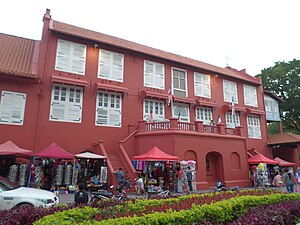
History and Ethnography Museum
Located inside the Stadthuys building, this museum traces Malacca's history from its founding in 1400 through independence in 1957. Ethnography exhibits focus on the diverse communities and their cultural traditions. Part of a complex including the Literature Museum and Governor's Museum.

Islamic Museum of Melaka
Housed in the old Islamic Council Building, originally a Dutch colonial structure with a British-added second storey. Documents the history of Islam in Malacca as Southeast Asia's most prominent center for Islamic dissemination.

Submarine Museum
An actual decommissioned French-built Agosta 70 class submarine (SMD Ouessant), built in 1978, now serving as an educational museum. Visitors can walk through the submarine's torpedo room, control room, and crew quarters.

Menara Taming Sari
Malaysia's first and tallest gyro tower at 110 metres (24 storeys). The revolving observation platform rises to 80 metres for a 7-minute 360-degree panorama of Malacca. Named after the legendary kris of warrior Hang Tuah.
Street Art & Murals

Melaka River Walk Murals
Stretching along both banks of the Malacca River, these murals give colorful facelifts to old warehouse buildings. Images depict Malaysian women from all religions and ethnic groups, alongside historical scenes and contemporary art.

The Orangutan House
Artist Charles Cham's studio gallery on Lorong Hang Jebat, established in 1993. Famous for its bold yellow-and-peach orangutan mural on the exterior. Features contemporary Malaysian art and artist-designed T-shirts. Free admission.

Kiehl's Heritage Mural Wall
The most photographed street art piece in Malacca, painted by artists Kiehl and Fritilldea (Mohd Anuar). Commemorates the five UNESCO World Heritage Sites in Malaysia with vibrant colors. Best visited before 9 AM to avoid crowds.

Melaka Street Art at The Well
An artistic haven at 1938 Jalan Kampung Kuli, featuring a concentrated collection of striking murals and 3D interactive street art pieces. Includes geometric walls, trick-art doorways, and the 'Welcome to Melaka' mural.
Streets & Districts
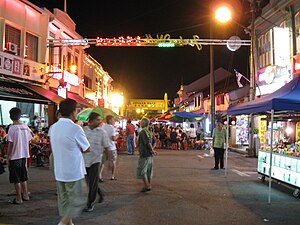
Jonker Street
The heart of Malacca's Chinatown, lined with heritage shophouses housing antique dealers, art galleries, and restaurants. Transforms into a bustling night market every Friday, Saturday, and Sunday evening with street food and live performances.

Heeren Street
Known as 'Millionaire's Row,' this was the elite address of wealthy Straits Chinese families in the 19th-20th centuries. Narrow-fronted, deep townhouses with ornate Peranakan facades — property taxes were once based on frontage width, explaining the elongated designs.

Harmony Street
Named for the peaceful coexistence of a Hindu temple, a mosque, and a Chinese temple within a single block. This street embodies Malacca's multicultural identity and religious tolerance spanning centuries.

Dutch Square
The iconic center of historic Malacca, surrounded by salmon-red Dutch colonial buildings including the Stadthuys, Christ Church, and the Tang Beng Swee Clock Tower. The starting point for most heritage trails and trishaw rides.
Waterfront & Nature

Malacca River Cruise
A 30-45-minute boat cruise along the historic Malacca River, passing murals, heritage shophouses, illuminated bridges, and fairy-lit trees. The river bisects the UNESCO heritage zone, offering unique waterside perspectives of the old town. Particularly scenic at dusk.

Straits of Malacca Viewpoint
The reclaimed Pulau Melaka island offers panoramic views across the Straits of Malacca, one of the world's most important shipping lanes. The waterfront promenade connects to the Melaka Straits Mosque and provides sunset views over the strait.
chinese-heritage

Cheng Hoon Teng Temple
Malaysia's oldest functioning Chinese temple, built in 1645 and dedicated to the Goddess of Mercy. A UNESCO-recognized heritage site with ornate southern Chinese architecture restored using traditional techniques.

Baba & Nyonya Heritage Museum
Three preserved 19th-century townhouses on Jalan Tun Tan Cheng Lock, ancestral home of the Chan family since 1861. Showcases Peranakan culture with hand-carved furniture and traditional Nyonya clothing.
colonial

A Famosa (Porta de Santiago)
Built in 1511 by the Portuguese, A Famosa is among the oldest surviving European architectural remains in Southeast Asia. Only the iconic gateway (Porta de Santiago) remains of the original fortress.

Stadthuys (Dutch Town Hall)
Completed in 1660, the Stadthuys is believed to be the oldest Dutch building in Southeast Asia. Originally the Dutch governor's residence, it now houses the History and Ethnography Museum.

Christ Church Melaka
Built in 1753 by the Dutch, this is the oldest functioning Protestant church in Malaysia. Its distinctive salmon-red facade anchors Dutch Square and features original hand-hewn timber ceiling beams.

St. Paul's Church (Ruins)
Built in 1521 by the Portuguese as 'Our Lady of the Hill,' this is the oldest church building in Southeast Asia. Its hilltop ruins house old Dutch tombstones and offer panoramic views.

St. Francis Xavier Church
Completed in 1856, this twin-spired neo-Gothic church is the only neo-Gothic structure in Malaysia. Named after the Jesuit missionary who was based in Malacca from 1545 to 1552.

St. Peter's Church
The oldest functioning Roman Catholic church in Malaysia, built in 1710 by descendants of Portuguese colonists. It remains the centre of the Portuguese-Eurasian Catholic community.

Proclamation of Independence Memorial
Housed in the former Malacca Club, this museum commemorates Malaysia's journey to independence. Opened in 1985 by Tunku Abdul Rahman on the 28th anniversary of Merdeka.

Portuguese Settlement (Medan Portugis)
Home to the Kristang (Portuguese-Eurasian) community since the 1920s, this seaside settlement preserves traditions dating to the 16th century. The Portuguese Square features seafood restaurants and cultural performances.